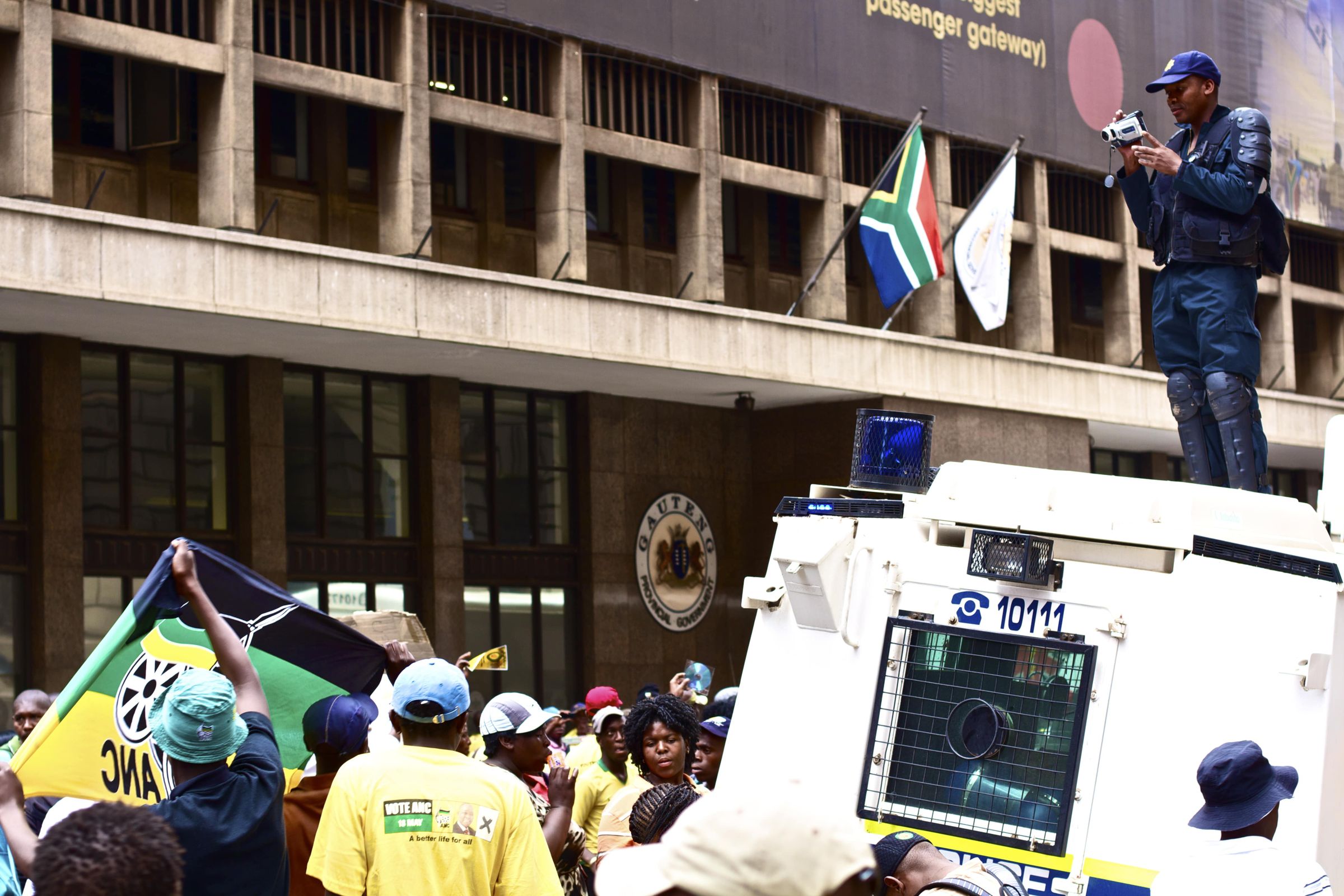
For the people of Johannesburg, the question of who governs their city is not an abstraction. It is the difference between water that runs, electricity that works, billing that is accurate and permits that arrive, or a metro that stalls. That future now rests on a hung result in one of 138 councils, and on the coalition negotiations that follow South Africa’s municipal elections.
The African National Congress, which commanded roughly 46% of municipal votes in 2021, saw that figure fall to 30.76%. The Democratic Alliance captured 24.64%, still the dominant party in Cape Town while overtaking the ANC in Gauteng. Another significant loss came in Durban’s eThekwini metro, where the MK Party emerged as the largest party but fell short of an outright majority.
ANC secretary-general Fikile Mbalula called it a “catastrophic outcome.” President Cyril Ramaphosa accepted the results of the Electoral Commission of South Africa, admitting it to be a decline that is concerning.
Coalitions have become a prevalent theme in South African politics ever since the ANC lost its majority in the national and provincial elections of 2024, an outcome that birthed the Government of National Unity and forced an adjustment for the party. That lesson has filtered down to the local level: in well over half of the 213 councils, no outright winner emerged, meaning parties must align on policy, budgets and administrations wherever they hold power.
With state power unprecedentedly dispersed, a turbulent future becomes a live question. If the GNU has taught anyone anything, it is that inter-governmental standoffs are inevitable. Amplifying this uncertainty is the possible fracture over who the next mayor of Johannesburg could be. At Sunday’s IEC event, ActionSA leader Herman Mashaba revealed that his party is willing to work alongside the DA, as long as it doesn’t involve its mayoral candidate for the City of Johannesburg, Helen Zille.
Explaining the intricacies of coalitions, Mlondi Mveli Mdluli, Member of South Africa’s Parliamentary Portfolio Committee on Small Business Development, tells FORBES AFRICA that, “Municipalities operate within national fiscal rules, so what they control is how well they spend, collect, maintain and approve.”
“Metros are where water, electricity, billing and permitting either function or fail, so whoever governs them, and whichever mayors emerge from the council negotiations, will ultimately be judged on delivery,” Mdluli says.
For residents of these metros, that judgment lands on daily life: whether services function or falter, and whether the councils that emerged from a fractured vote can govern at all.
Meanwhile, the clock is running. Secure stable governing arrangements quickly, and Mdluli expects that will reassure investors: “Cities are the engine room of the economy, so even modest improvements in service delivery compound into jobs and investment.” That promise of compounding gains is precisely what hung councils stand to lose if negotiations drag on. Failure to find harmony risks paralyzing municipalities’ ability to draft policies and allocate public capital.
“Worse still would be local arrangements that pull against the national policy framework and unsettle confidence in where policy is heading,” Mdluli adds. “We have seen the local version of that before, and the cost shows up in delayed projects and investors choosing to wait.”
For now, the parties continue their talks, and the people who live in the country’s hung metros wait to see which mayors emerge and whether their cities can deliver.