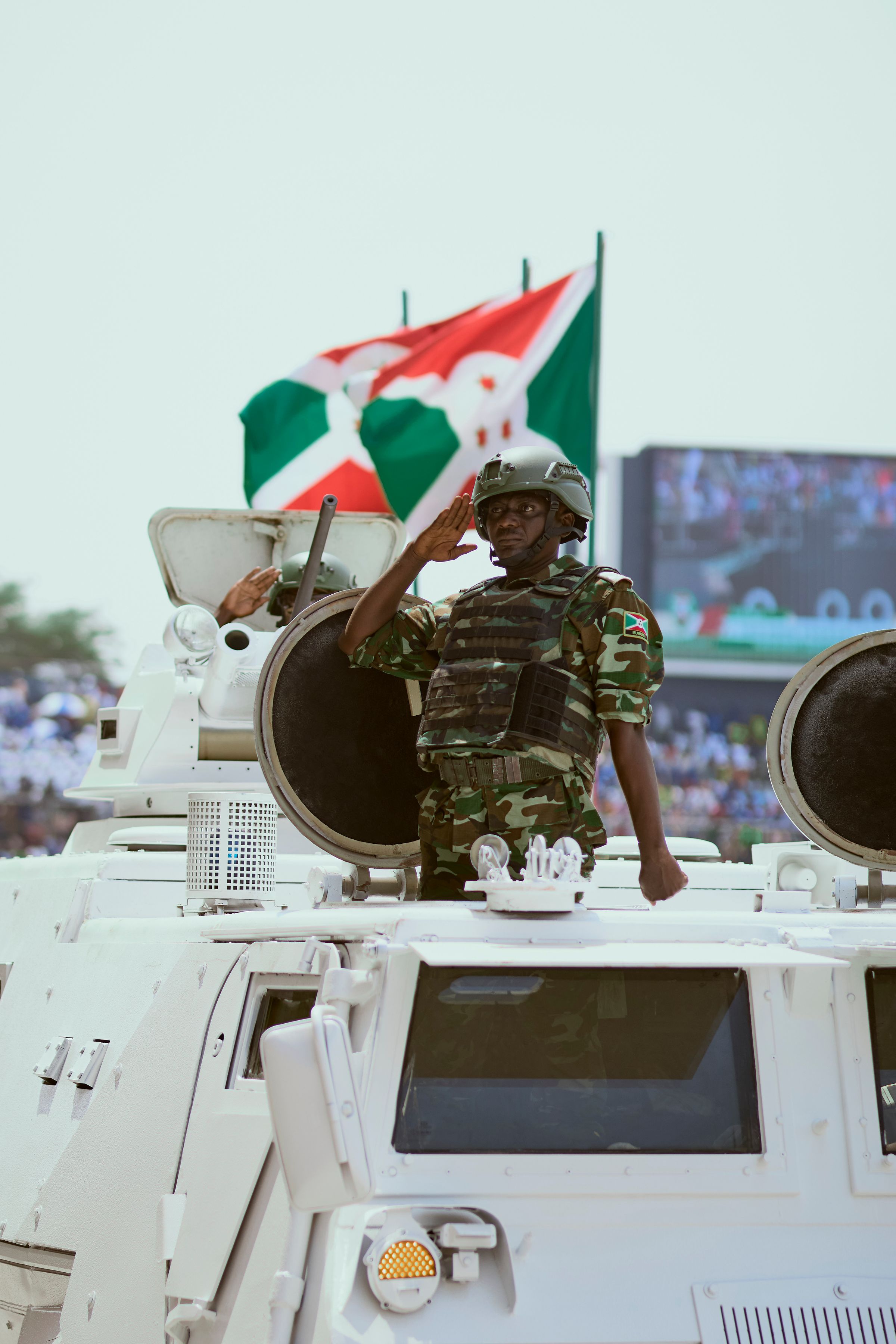
Pretoria cemetery holds 108th Remembrance Day wreath service
Military cemetery commemoration runs as a coordinated wreath-laying operation
The 108th Remembrance Day service came together at the Thaba Tshwane New Military Cemetery in Pretoria on Sunday, delivered through a coordinated effort by the South African Armed Forces, military veterans and diplomatic representatives. More than 30 wreaths were laid by international diplomats, military chiefs and veteran organisations as the ceremony drew to a close. The event, covered by SABC News (https://www.sabcnews.com/sabcnews/sa-military-honours-fallen-soldiers-at-108th-remembrance-day-service/), worked as both a tribute and a carefully staged operation, run by those who organise and execute the country’s commemorative programme on the ground.
Execution began well before the formal proceedings. Members of the South African Legion Pretoria Branch carried out the preparatory work of placing traditional red poppies on graves ahead of the service. It was during this operational phase that they made a poignant discovery: the resting place of Private H.W. Visser, who died on 3 March 1942 at just 16 years old. Marina Valentine, Chairperson of the SA Legion Pretoria Branch, reflected on the finding. “One of our veterans found a grave marked 15318 Private H.W. Visser, 3rd of March 1942, age 16. Let that just sink in for a minute. Incredibly young.”
The ceremony itself was structured to honour those who served across all chapters of military history, from the world wars to the liberation struggle and modern peacekeeping missions. Valentine described the service as a vital moment to honour those who never returned. “We remember not only their courage in times of conflict, but also the values they defended: duty, respect, comradeship and hope.”
SA Army Chaplain Nicolene Herbst, one of the ceremony’s key contributors, gave the programme its spiritual core. Speaking about the remembrance flower, she said: “A beautiful red flower, which was born out of the ruined earth of the First World War, where artillery shook the ground into desolate mud and grey ashes. To the soldiers, surrounded by death, these flowers were giving hope; this was life rising out of the broken ground. It shows us that from the deepest wounds of conflict, courage and sacrifice, new life takes root.”
Herbst also turned to the modern operational record of the South African National Defence Force, honouring members currently deployed abroad. “We remember the post-1994 members of the SANDF who paid the supreme price, carrying our flag abroad, including recent losses in the Central African Republic and the Democratic Republic of Congo. Every soldier has a name, a family and a divine soul, we also remember our brothers and sisters who came home but carry the physical and emotional marks of war.”
Meanwhile, the service ran under the theme “United in Sport”, and Valentine used it to reflect on athletics’ capacity to unite people in both conflict and peace. “During the Christmas Truce of 1914, soldiers from opposing sides on the Western Front briefly laid down their weapons and met in no man’s land, where they exchanged greetings, shared gifts and famously played football together. Closer to home, South Africa witnessed the unifying power of sport during the Rugby World Cup in 1995, as the country emerged from a divided past.”
The closing logistics went as planned, with the wreath-laying forming the final act. A wreath was also laid in tribute to the unknown soldier. The scale of that gesture is considerable: in World War I, the remains of hundreds of thousands of soldiers from many nations were never recovered or identified, and after World War II, millions of soldiers were reported missing on all fronts, with the Eastern Front, the Pacific and Western European theatres accounting for the vast majority.
Expressing her final gratitude to attendees, Valentine concluded: “To our veterans, we thank you for your service, sacrifice and example. May we remember the fallen with gratitude, honour the living with respect, and carry forward the enduring lesson that sport, like remembrance itself, has the power to unite us all.”
Whether next year’s 109th service can again bring together this many diplomats, veterans and military chiefs on the same ground in Pretoria remains an open question for the organisers who make it run.
Q&A
Where was the 108th Remembrance Day service held?
At the Thaba Tshwane New Military Cemetery in Pretoria, on a Sunday.
What discovery was made during the preparatory work?
Members of the SA Legion Pretoria Branch, while placing red poppies on graves, found the resting place of Private H.W. Visser, who died on 3 March 1942 at just 16 years old.
What did SA Army Chaplain Nicolene Herbst say about deployed SANDF members?
She honoured post-1994 SANDF members who paid the supreme price carrying the flag abroad, including recent losses in the Central African Republic and the Democratic Republic of Congo, as well as those who returned with physical and emotional marks of war.
How did the ceremony conclude?
The closing logistics went as planned, with the wreath-laying as the final act, including more than 30 wreaths from international diplomats, military chiefs and veteran organisations, plus a wreath for the unknown soldier.