Padel's South Africa Boom: Can Investors Lock In Returns?
Court operators weigh capital costs against player retention
Padel’s rapid rise in South Africa is often told through its celebrity connections, but the story that matters most to operators and investors is one of capital, capacity and whether today’s boom can be converted into durable returns.
The numbers behind the global game underline the scale of the opportunity. Created in Mexico in the late 1960s, padel has grown into a worldwide phenomenon, and according to the 2026 Global Padel Report the number of active players climbed to nearly 20 million last year. Spain, Italy, Portugal and Argentina remain established strongholds, while participation keeps expanding in newer markets. That footprint has strengthened ambitions for Olympic inclusion, and it has drawn serious money: tennis great Rafael Nadal and football superstar Cristiano Ronaldo are among the high-profile figures associated with the sport as players and investors, while former Netherlands international Arjen Robben has taken his enthusiasm beyond casual recreation and into tournament competition. In South Africa, former Bafana Bafana striker Shaun Bartlett has become involved in padel both on and off the court.
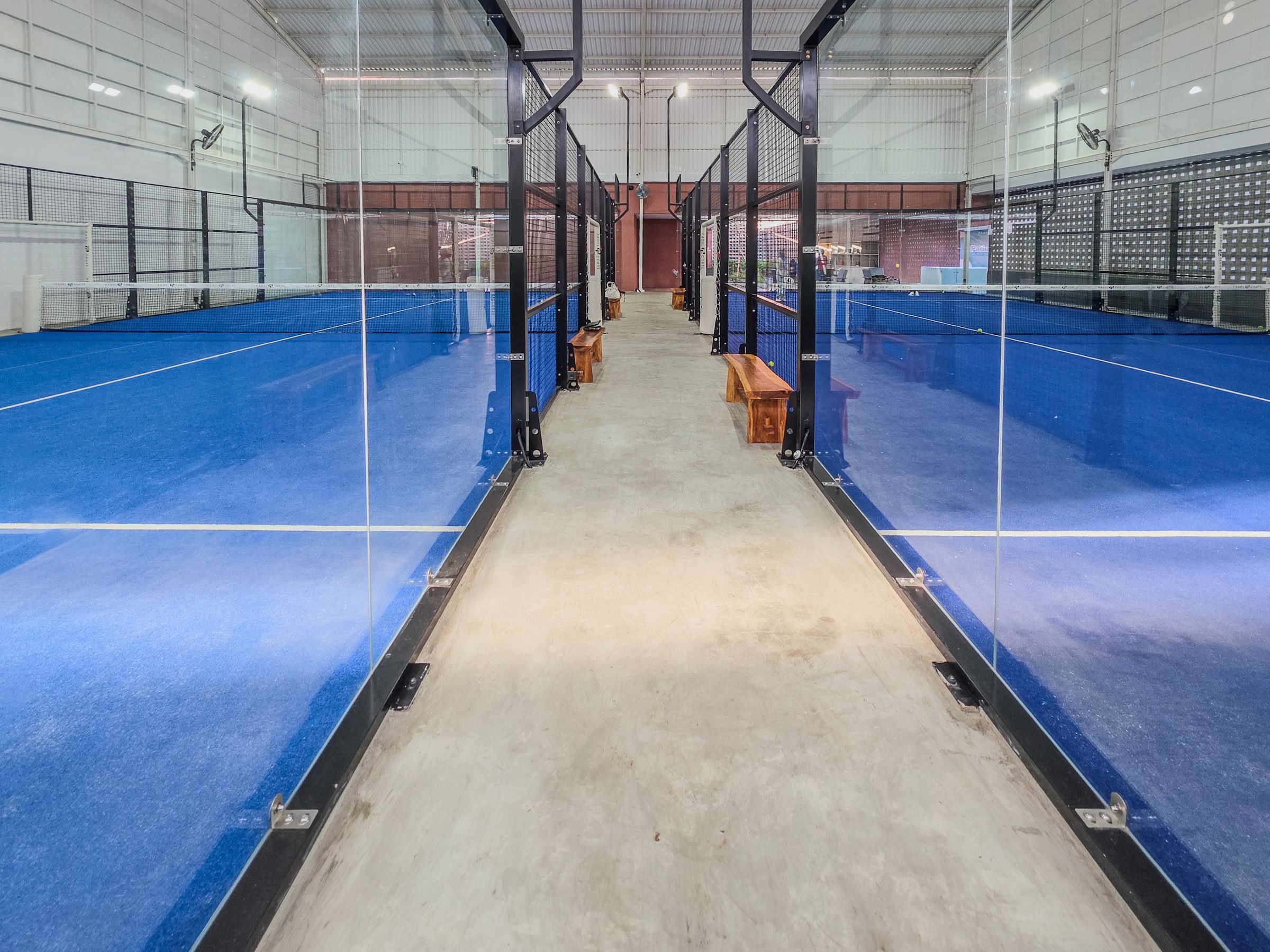
Cape Town illustrates what that investment looks like in practice. When Arturf Padel Arena opened in Paarden Eiland in December 2023, it started with six courts and expanded to 11 in May 2025. The brand has since extended to Villagers in Claremont, a sign of growing demand. But Rasheed Ho-Kim of Arturf Padel Arena is quick to note that expansion comes at a cost.
“There’s a great deal of investment behind every padel facility,” Ho-Kim says, pointing to the costs of maintenance, staffing, security, technology, and ensuring players receive a quality experience. Building courts, in other words, is one thing; keeping a facility running successfully is another.
For Ho-Kim, the long-term health of the sport, and by extension the return on that capital, will depend on what happens after the current boom. “The initial excitement around any fast-growing sport will eventually settle. What determines its future is whether people continue playing once the novelty wears off,” he says. That means investing in coaching, beginner programmes, social games and youth development rather than measuring progress simply by the number of courts being built.
“The next chapter of padel in South Africa will be about development rather than simply expansion,” he says. “More courts alone won’t grow the sport. We need to introduce younger players, develop local talent, support coaching, and make the game accessible to people at different levels.”
Meanwhile, the commercial logic rests on retention, and that is where the sport’s playing characteristics matter. Padel combines elements of tennis and squash, played by doubles teams on a court enclosed by glass and wire. Diego Maradona, who played twice a week on enclosed courts in Argentina and Spain as part of his regular training, once described it as “football in a box”. The comparison captures something of its character, though not the whole story.
Beginners can pick up a racquet, step onto the court and enjoy themselves without years of coaching, yet the more they play, the more there is to learn. Even experienced tennis and squash players have to adapt: the walls change the way rallies unfold, and doubles play demands sharp communication, positioning and tactical awareness. What initially looks straightforward soon becomes a test of patience, touch and decision-making. That balance between accessibility and competition, Ho-Kim believes, is central to the sport’s commercial success.
“Padel has managed to do something that many sports struggle with; it has made participation accessible without taking away the competitive element,” he says. “You don’t need years of training to enjoy your first game, but the more you play, the more you realise how much there is to learn. That combination is what keeps people coming back.”
The social side is just as important to the business model. “People initially come for the sport, but many stay for the community,” says Ho-Kim. “We’ve watched complete strangers become regular playing partners, friendships develop across different age groups, and people who were never particularly active find themselves playing several times a week. Padel has become more than a sporting activity. For many people, it’s part of their social routine.”
That philosophy shaped Arturf’s development from the outset. “We wanted to build a sporting environment where beginners felt just as welcome as experienced players, where people could train, compete, socialise, and become part of a community,” Ho-Kim says.
Maradona’s description of “football in a box” still fits, but padel has since developed an identity and a culture all of its own. Whether today’s enthusiasm becomes a lasting part of South Africa’s sporting landscape will depend less on headline names and new courts than on whether operators can keep players coming back once the novelty fades.
Q&A
How has Arturf Padel Arena grown since opening?
It opened in Paarden Eiland in December 2023 with six courts, expanded to 11 courts in May 2025, and extended the brand to Villagers in Claremont, reflecting growing demand.
What costs does running a padel facility involve beyond building courts?
Rasheed Ho-Kim points to a great deal of investment behind every facility, including maintenance, staffing, security, technology and ensuring players receive a quality experience.
What will determine returns on padel investment after the boom?
Ho-Kim argues the initial excitement will settle, so the future depends on whether people keep playing once the novelty wears off, which requires investment in coaching, beginner programmes, social games and youth development rather than simply building more courts.
Why does padel's playing style support the commercial model?
Padel is accessible to beginners without years of coaching but offers depth for experienced players, since walls change rallies and doubles play demands communication, positioning and tactics. Ho-Kim says that balance between accessibility and competition keeps people coming back, and the community element turns first-time players into regulars.