Broken Water and Sewage Lay Bare ANC's Delivery Failure
Municipal services collapse as water, sewage and refuse systems fail voters
Water systems collapse. Roads crumble. Sewage runs through communities. The verdict of South Africa’s November 4 local government elections, according to an analysis published by Jacobin, is written less on ballot papers than in the streets, where even middle-class areas now go weeks or months without water and poor residents live among uncollected refuse.
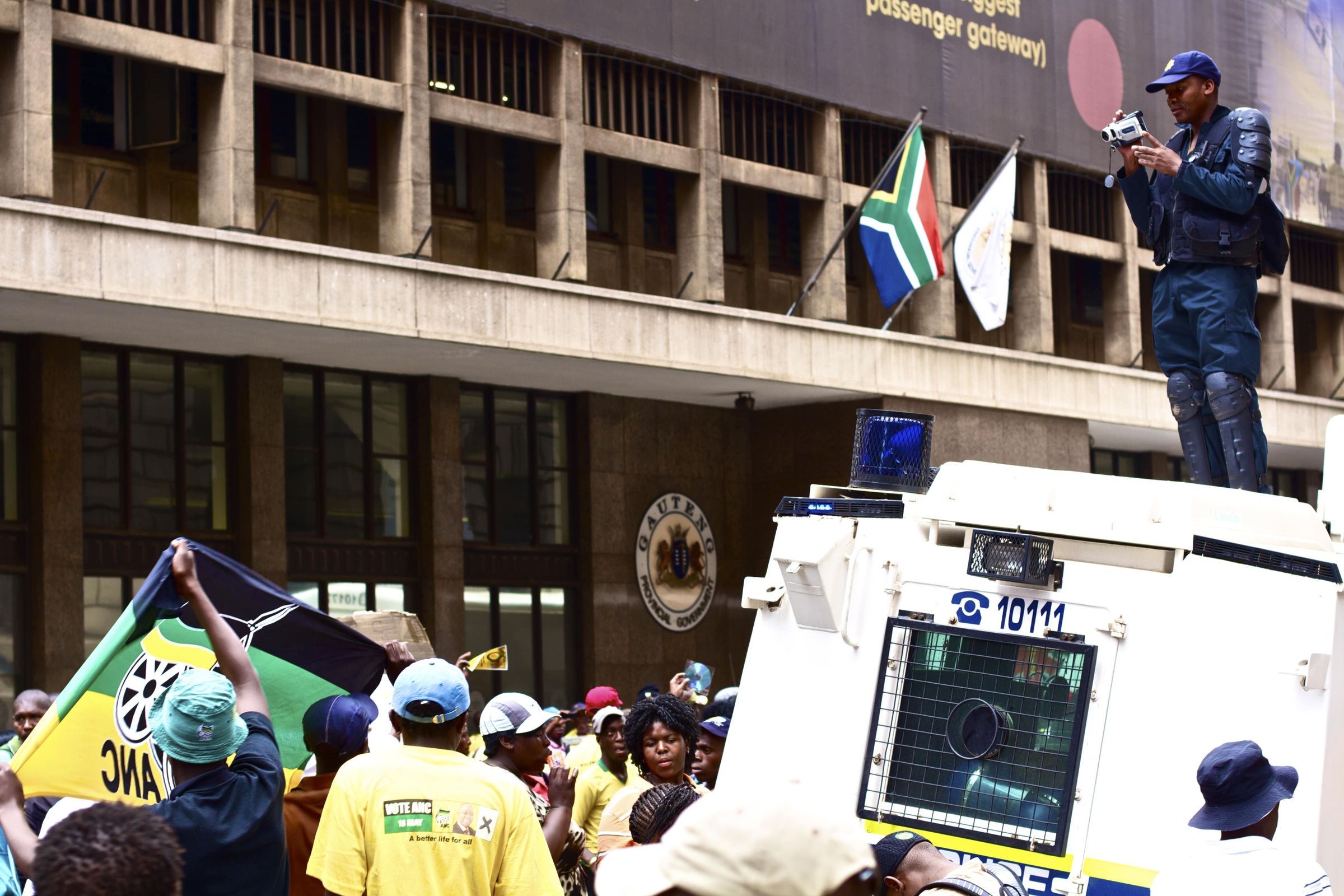
That operational breakdown is the backdrop to the African National Congress’s historic collapse. With more than 70 percent of votes counted, the ANC’s national share fell to around 32 percent, and the party is not expected to hold an outright majority in any major city. The Democratic Alliance is projected to become the largest party in most big cities. Jacob Zuma’s uMkhonto weSizwe Party is on track to lead Durban, while ActionSA performed strongly in Johannesburg and Pretoria, likely finishing second in Pretoria with the ANC in third.
What failed, the analysis argues, is delivery itself. Municipalities have become centers of patronage and competition over tenders rather than vehicles for services. Austerity combined with extreme corruption has produced, in the author’s words, the decay of the state and the collapse of public services.
At the heart of the failure is a governance model that contracts out essential functions while state capacity deteriorates. A developmental state, the argument runs, cannot outsource development and claim the credit; it requires public institutions able to plan, build, maintain infrastructure, and provide services directly. Instead, South Africa has built an expanding network of contractors, consultants, and intermediaries dependent on public expenditure, while the institutions responsible for serving the public grow weaker. Where the public sector is treated as a source of tenders rather than an instrument for meeting social needs, the line between political leadership and business accumulation blurs.
The economic foundations beneath this delivery failure eroded over decades. Political apartheid was defeated, the analysis acknowledges, but inherited economic structures remained largely intact. Land ownership stayed extraordinarily unequal, and the former Bantustans never received the productive foundations needed to overcome inherited poverty. The ANC adopted neoliberal policies in the 1990s, and redistribution was repeatedly deferred on the promise that growth would come first, even as the country deindustrialized.
The author calls the result a “warehouse economy”: raw materials and insufficiently processed minerals are exported, finished products are manufactured elsewhere, and those products are imported for domestic consumption. Factories closed. Warehouses stayed open. Enormous mineral wealth continues to be extracted without the productive industries needed to turn it into decent employment at the required scale.
The labor statistics cited in the analysis measure the human cost. In the second quarter of 2026, official unemployment stood at 33.6 percent. Including discouraged workers, it was 43.8 percent. Among fifteen to twenty-four year olds in the labor force, unemployment reached 62.8 percent. The poor, the analysis states, are now poorer and more numerous than under apartheid.
Meanwhile, the organizations that might have held the delivery system to account have hollowed out. Trade unions have been divided, some as corrupt as the ANC itself, and political education within the movement has declined. With the exception of Abahlali baseMjondolo, a two-hundred-thousand-strong movement of the urban poor, community organizations have lost much of their strength, many collapsing completely.
Into this vacuum, the Right has advanced. Operation Dudula and March and March have built movements around violent hostility toward African migrants, offering communities devastated by unemployment and failing services a simple explanation: foreigners are responsible. ActionSA and the MKP, the two parties that surged in these elections, have both supported xenophobic street mobilization that forced up to 150,000 migrants, including refugees and documented migrants, from the country within months. The ANC, the analysis argues, made a profound error in indulging organized xenophobia rather than opposing it. This mobilization increasingly claims South Africa has too many rights and that the Constitution should be changed to remove some of them.
The Left has fared little better in the author’s assessment. The South African Communist Party remained committed to governments implementing austerity and privatization while speaking the language of socialism. Earlier this year it proposed a “Conference of the Left” inviting the ANC and Zuma’s MKP; the South African Federation of Trade Unions declined, as did Abahlali baseMjondolo.
The ANC’s collapse, the analysis concludes, is not mysterious. It is the political consequence of a deeper social, economic, and organizational failure, measured most concretely in broken water systems, closed factories, and municipalities that no longer deliver. Rebuilding, the author argues, requires a new working-class political project rooted in renewed organization and a credible program of economic transformation, one in which water, electricity, public transport, housing, and health care are all treated as workers’ issues. Whether such a project emerges, the author warns, will determine whether South Africa’s political future is shaped by democratic forces or by the xenophobic and authoritarian movements now ascendant.
Q&A
What service delivery failures does the analysis link to the ANC's electoral collapse?
Water systems have collapsed, sewage runs through communities, roads crumble, and even middle-class areas go weeks or months without water, while poor residents live among uncollected refuse.
What governance model does the author identify at the heart of the delivery failure?
Municipalities have become centers of patronage and competition over tenders rather than vehicles for services, contracting out essential functions while the public institutions responsible for planning, building and maintaining infrastructure grow weaker.
What were the projected election results described in the article?
With more than 70 percent of votes counted, the ANC fell to around 32 percent and is not expected to hold an outright majority in any major city; the DA is projected to be largest in most big cities, the MKP to lead Durban, and ActionSA likely second in Pretoria with the ANC third.
What labor statistics does the analysis cite as the human cost of the delivery failure?
Official unemployment stood at 33.6 percent in the second quarter of 2026, 43.8 percent including discouraged workers, and 62.8 percent among fifteen to twenty-four year olds in the labor force.