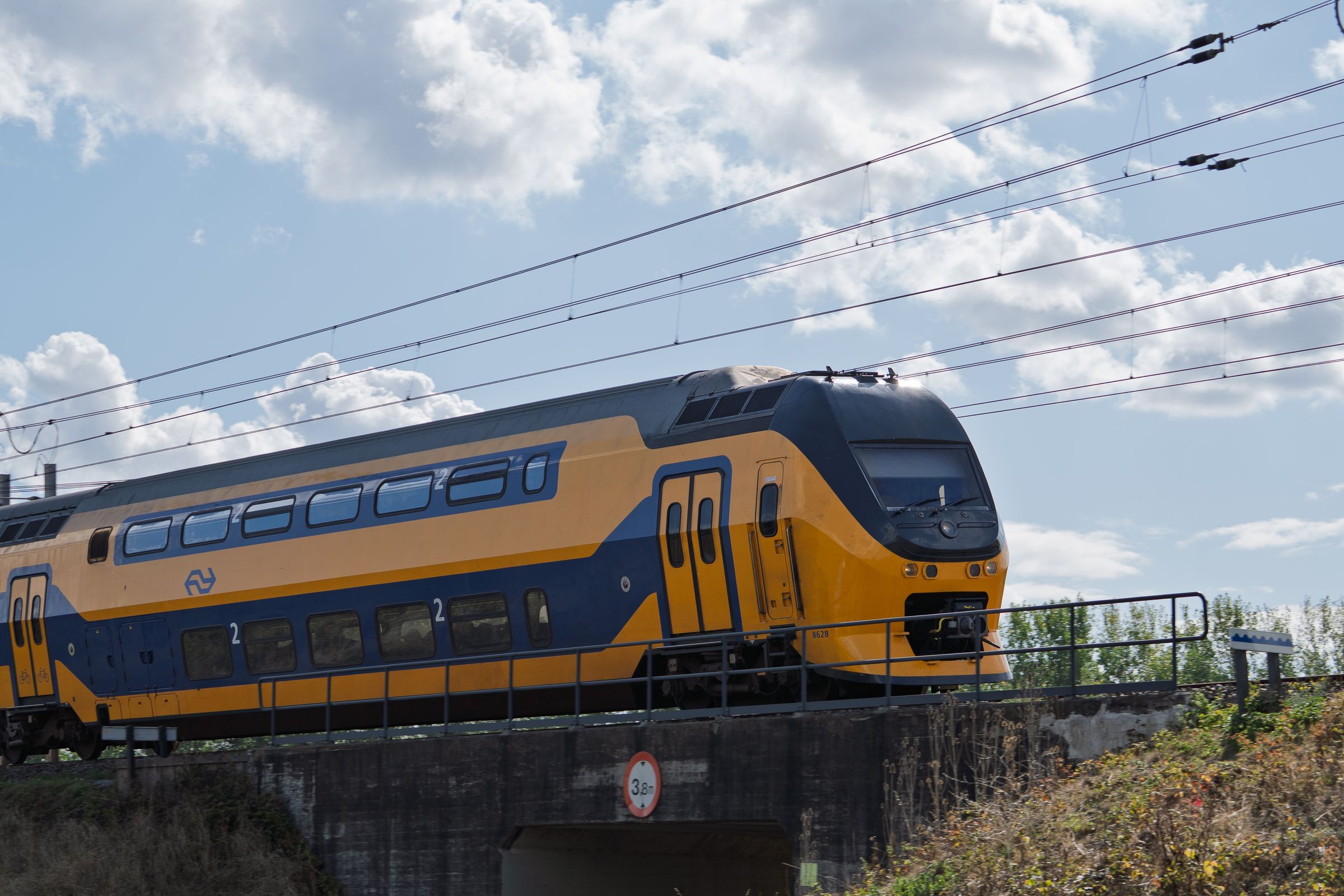
South African train artisans find steady work in Dutch rail
Recruitment agencies move skilled tradespeople north as the domestic training pipeline falls short
A 28-man crew under foreman Donovan Cilliers services and repairs trains for Nederlandse Spoorwegen, the Dutch national railway company. Cilliers, 28, sold his house in South Africa, resigned from a well-paid job and relocated in September 2023 after the placement agency Research Square handled almost all his paperwork. His highly skilled migrant visa came through within about four weeks of the offer. That speed of processing, and the machinery behind it, sits at the heart of a quiet pipeline moving South African technical skills into the Dutch economy.
The numbers show the scale of the flow. More than 42,000 South African-born people have made the Netherlands their home over the past 16 years, and at the start of 2026, 51,078 people of South African origin lived there, including children born to South African parents. Annual arrivals have quadrupled since 2010, from 948 to 3,863 last year, peaking at 5,797 in 2022, according to Statistics Netherlands.
The mechanics of placement are largely handled by recruitment agencies. Dylan van de Staay, co-founder, managing partner and operations manager of Research Square, said the agency has spent eight years placing foreign workers in the Netherlands, most of them South African, and that demand for mechanical and mechatronics technicians and electricians is growing. Workers are given permanent contracts with the agency and placed with client companies, which later employ them directly. Xelvin, another agency in the chain, performs the same function: its representative Colette Swart said the firm takes care of contracts, visas, flights and accommodation, with operations in other European countries as well. Megan Pulvenis, who also relocated from South Africa, said Xelvin helps Dutch companies find tradespeople they struggle to recruit locally.
The legal route is well defined. Djamal Vanza, founder of Cape Town-based Vanza Consulting & Immigration, said the most common pathway is the highly skilled migrant permit, which allows Dutch employers recognised by the Immigration and Naturalisation Service to sponsor foreign professionals. The IND aims to process complete applications from recognised sponsors within two weeks, though the legal limit is 90 days. Vanza cautioned that settling in costs more than applicants expect: accommodation, health insurance, registration with the local municipality and housing-market navigation all come on top of the visa, and clients should be financially prepared for the first few months.
On the ground, the costs are real. Cilliers received a €1,500 onboarding bonus, worth just over R27,800, but had to pay a month’s rent upfront plus a two-month deposit, more than R115,000 in his first month alone. The average monthly rent in the Dutch private rental market was €1,914, about R35,200, between July and September this year, according to rental platform Pararius. Ryan Ras, a millwright now living in Alkmaar after landing in the Netherlands on March 11, received a €3,000 relocation allowance, about R55,200, which he must repay over two years. Carli Whitebooi, a qualified electrician from Gqeberha, had her visa, flight, her husband’s flight, the deposit and two months’ rent covered by her agency, all repaid later. Her contract ran 18 months before she returned home in June 2025, and she found that water, gas, electricity and Wi-Fi were charged on top of rent, making the salary look better on paper than in practice.
For the employers absorbing these workers, the operational payoff is clear. Zandre Blaauw, a former Paarl machinist who arrived on August 28, 2023, found his Dutch colleagues protective of family time, with school ending at 2.15pm, or 11.45am on Fridays. Bryan Ford, of Richards Bay, works as an electrical and instrumentation technician in the Groningen area after sending about 100 job applications in one night in January 2023; by April he and his fiancée were in the Netherlands, having proved their relationship to the Dutch authorities with social media records and messages. Fawaaz Dassie, a software developer from Mitchells Plain, arrived in June 2023 on a sponsored visa and now pays about €1,600 a month in rent in Rotterdam.
Back home, by contrast, the delivery picture is strained. Sol-Tech in Pretoria admits about 1,000 students a year, with 500 to 600 passing their trade tests annually. Managing director Paul van Deventer estimated that more than 90% of those who go overseas return within two years, but noted that South Africa is not training enough artisans to replace those who retire or leave. “Every artisan who leaves is a loss to a country that already does not have enough of them,” he said.
The training pipeline shows the shortfall in hard numbers. The Manufacturing, Engineering and Related Services Sector Education and Training Authority reported 1,959 artisans qualified through its programmes in 2025/26 against a target of 3,500, and 2,612 new apprentices registered against a target of 5,000. Acting CEO Naphtaly Mokgotsane said the pipeline was “not yet sufficiently strong or predictable”, and that the authority keeps no figures on how many qualified artisans leave, where they go or whether they return. Zizile Nyawo of the Steel and Engineering Industries Federation of Southern Africa said employers struggle to find experienced millwrights, electricians, fitters, welders and boilermakers, and pointed to Seifsa’s 2026 report showing production fell 1.6% and employment 0.43% in 2025. “We cannot expect to retain skilled artisans if the economy is unable to provide sufficient opportunities,” she said.
Meanwhile, the Dutch demand shows no sign of slowing. Van de Staay said placements continue to grow, and the machinery connecting South African workshops to Dutch factories, depots and riverbeds operates with a reliability the domestic pipeline cannot yet match. Whether South Africa can close that gap before the next wave of departures remains the open question.
Q&A
Who services and repairs trains for the Dutch national railway?
Donovan Cilliers, a 28-year-old foreman, leads a 28-man crew that services and repairs trains for Nederlandse Spoorwegen, the Dutch national railway company.
What is the most common legal pathway for these workers, and how fast is it processed?
The highly skilled migrant permit, which allows Dutch employers recognised by the Immigration and Naturalisation Service to sponsor foreign professionals. The IND aims to process complete applications from recognised sponsors within two weeks, though the legal limit is 90 days.
How is South Africa's artisan training pipeline performing?
Sol-Tech admits about 1,000 students a year with 500 to 600 passing trade tests. merSETA qualified 1,959 artisans in 2025/26 against a target of 3,500 and registered 2,612 new apprentices against a target of 5,000.
What upfront costs do relocated workers face?
Accommodation, health insurance, municipal registration and housing-market navigation come on top of the visa. One worker paid more than R115,000 in his first month, and allowances like a €3,000 relocation payment must be repaid over two years.