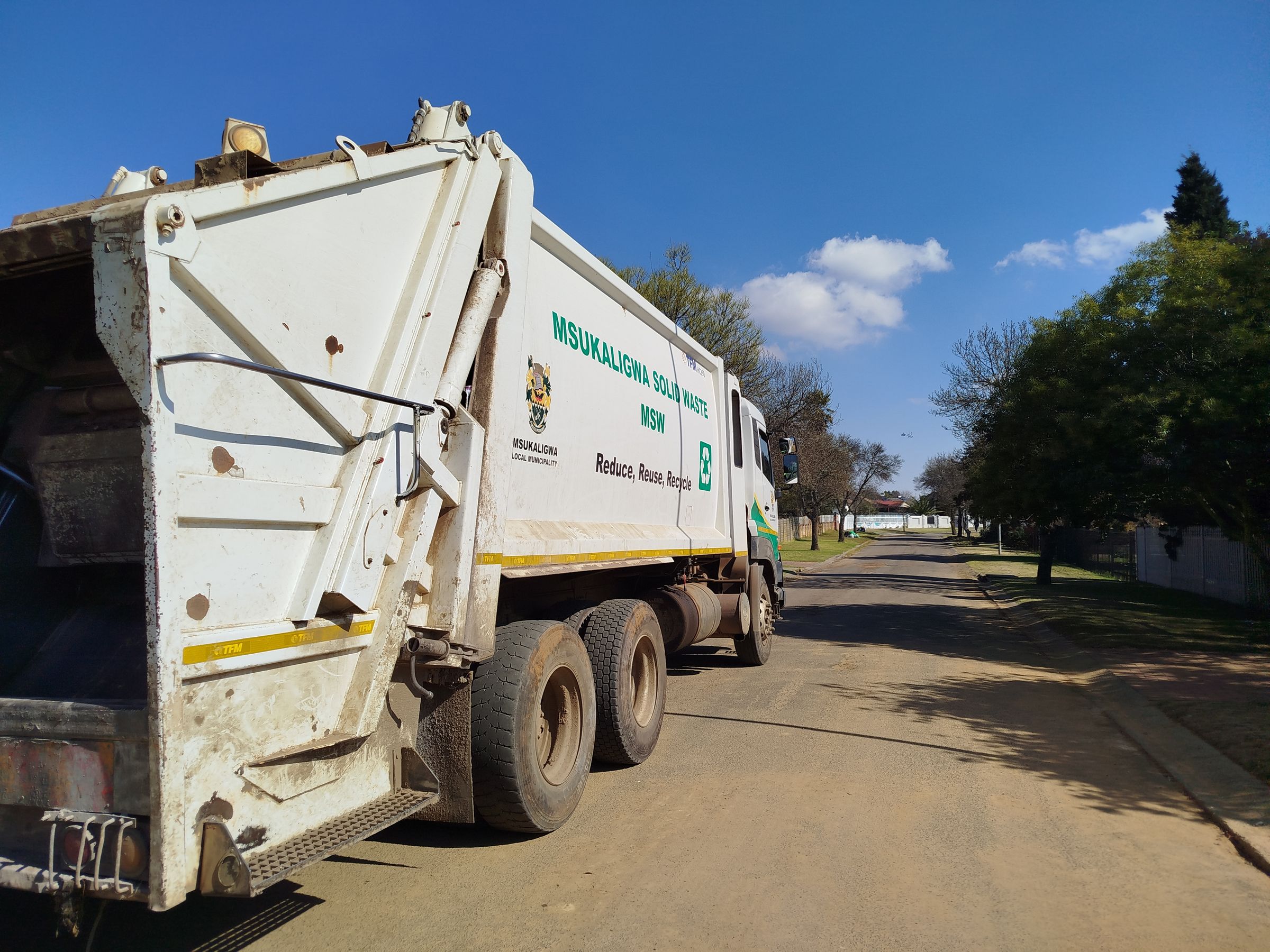
Ballot Test for Broken Pipes: Can SA Cities Deliver Water?
Municipal polls put water supply and service delivery under scrutiny
Durban’s water crises and Johannesburg’s decaying infrastructure will be on the ballot when South Africa’s municipalities go to the polls on 4 November, with the question on many doorsteps a practical one: can local government still provide water, working infrastructure and basic services? The sixth local government election since 1994 may prove one of the most consequential in the country’s democratic history, precisely because the sphere once viewed as closest to ordinary citizens has become the frontline of voter dissatisfaction.
The operational picture is stark. After 32 years in government, the African National Congress faces mounting public frustration over unemployment, corruption, failing service delivery, infrastructure collapse, electricity disruptions and recurring water shortages. For many voters, the debate is no longer about liberation credentials but about whether municipalities can function at all. Water shortages, deteriorating infrastructure, crime and municipal mismanagement have emerged as the defining concerns of this election, dominating dinner-table conversations more than ideology.
Nowhere is the gap between promise and performance more visible than in Durban. The eThekwini Municipality, with an annual budget exceeding R55 billion, remains one of South Africa’s most strategically important metros, yet the city has become synonymous with recurring water crises, service delivery failures, infrastructure deterioration and governance controversies. Those challenges have fuelled growing voter frustration and turned Durban into one of the most closely watched electoral battlegrounds in the country. The ANC has governed the city hall, its politics and its coffers for more than two decades, but a change of administration is no longer unthinkable. Former president Jacob Zuma’s uMkhonto weSizwe (MK) Party has mounted an aggressive grassroots campaign aimed largely at former ANC supporters, and a recent MarkData survey suggests the party is polling strongly in Durban, positioning itself as a potential contender for control of the multi-billion-rand municipality. Whether those figures translate into votes remains uncertain, but they reflect widespread voter fluidity in a province once regarded as a reliable ANC stronghold. The Inkatha Freedom Party, which ran the city during the early years of democratic local government, is seeking renewed relevance, while the Democratic Alliance is aggressively targeting urban and middle-class voters.
Johannesburg, the country’s economic hub, remains a flashpoint of its own. Plagued by infrastructure decay, water challenges and rising crime, the city has become a key battleground where the DA, under mayoral candidate Helen Zille, has centred its campaign on governance reform, anti-corruption measures and municipal renewal, presenting itself as a credible alternative to ANC rule in the major metros.
Meanwhile, the Electoral Commission of South Africa has confirmed that 620 political parties are registered to contest the 2026 Local Government Elections, a substantial increase from the 508 registered ahead of previous polls. IEC Chief Electoral Officer Sy Mamabolo said the growing number of registered parties reflects the vibrancy of South Africa’s constitutional democracy and the continued confidence of citizens in the electoral process. Voters will face lengthy ballot papers filled with parties, civic groups and independent candidates, a sign of how fragmented the political landscape has become.
Coalition politics looks set to shape who actually runs these municipalities. Johannesburg, Tshwane and several other metros appear unlikely to produce outright majorities, pointing to another round of post-election negotiations and coalition agreements. Tshwane, the administrative capital, has attracted a crowded field of mayoral hopefuls from the DA, ActionSA, the EFF, the MK Party, the IFP and the Freedom Front Plus, while the ANC has delayed naming its candidate. For voters, the challenge is determining whether coalition governments enhance accountability or contribute to instability and policy paralysis.
The parties themselves frame the contest as a test of execution. Julius Malema’s EFF campaigns on economic transformation and service delivery, while Herman Mashaba’s ActionSA targets urban voters frustrated by crime, corruption and municipal collapse, summed up in its poster slogan: Gatvol. Let’s fix it. Ratepayer and civic organisations, frustrated by what they regard as ineffective and corrupt governance, have moved from protest politics to electoral participation, seeking influence inside council chambers rather than outside municipal buildings.
Facing one of the ANC’s most difficult electoral tests, President Cyril Ramaphosa has intensified his grassroots campaign across key battleground municipalities. Campaigning in Soweto, he defended the party’s record while acknowledging residents’ concerns over water shortages and service delivery failures. “The transformation that we see in our country, whether people like it or not, has been brought about by the ANC,” he told residents, as the party emphasised its achievements since 1994, including expanded access to housing, healthcare, education and social welfare programmes. Opposition parties, however, are attempting to turn the election into a referendum on governance, accountability and municipal performance.
Recent polling reflects a landscape far more competitive than at any point since 1994. Independent surveys suggest the ANC remains ahead nationally, albeit with a significantly reduced margin, while research by the Social Research Foundation and The Common Sense indicates continued erosion of ANC support and gradual gains for the opposition. Political strategist Frans Cronje argues that voter behaviour increasingly mirrors economic realities. “The ANC’s decline reflects years of weak economic growth and deteriorating living standards. Most voters are increasingly driven by practical concerns rather than ideological loyalty,” he notes. The DA has benefited from dissatisfaction among middle-class and urban voters, though analysts caution that perceptions of the party’s demographic profile continue to limit its national growth.
One encouraging feature of this election is the emergence of candidates under the age of 30, including researchers, entrepreneurs, community activists and professionals contesting seats across the country. For many, municipal government represents the level of politics where practical change can happen most quickly, and their participation may help attract first-time voters and re-engage a generation that has often felt disconnected from traditional party politics.
By next Wednesday evening, South Africans may know whether the country’s political trajectory has shifted decisively or whether the ANC has secured another opportunity to rebuild public confidence. For Durban, Johannesburg, Tshwane and other key municipalities, the outcome will determine not only who occupies the city halls and wears the mayoral chains, but how communities confront water security, infrastructure renewal, urban housing and accountable governance. In an election increasingly defined by performance rather than promises, every vote may help shape South Africa’s next democratic chapter, and whether the taps run and the services function may depend on the answer.
Q&A
What service delivery issues define the 2026 local government elections?
Water shortages, deteriorating infrastructure, crime and municipal mismanagement have emerged as the defining concerns, dominating conversations more than ideology, alongside unemployment, corruption, infrastructure collapse and electricity disruptions.
Why is Durban a closely watched battleground?
The eThekwini Municipality, one of South Africa's most strategically important metros with an annual budget exceeding R55 billion, has become synonymous with recurring water crises, service delivery failures and infrastructure deterioration. The ANC has governed the city for more than two decades, but the MK Party is polling strongly there and a change of administration is no longer unthinkable.
What does the Electoral Commission say about the ballot?
The IEC has confirmed 620 political parties registered to contest the 2026 Local Government Elections, up from 508 ahead of previous polls. Chief Electoral Officer Sy Mamabolo said the growing number reflects the vibrancy of South Africa's constitutional democracy, and voters will face lengthy ballot papers filled with parties, civic groups and independent candidates.
How might coalition politics affect municipal governance?
Johannesburg, Tshwane and several other metros appear unlikely to produce outright majorities, pointing to another round of post-election negotiations and coalition agreements. The challenge for voters is determining whether coalition governments enhance accountability or contribute to instability and policy paralysis.