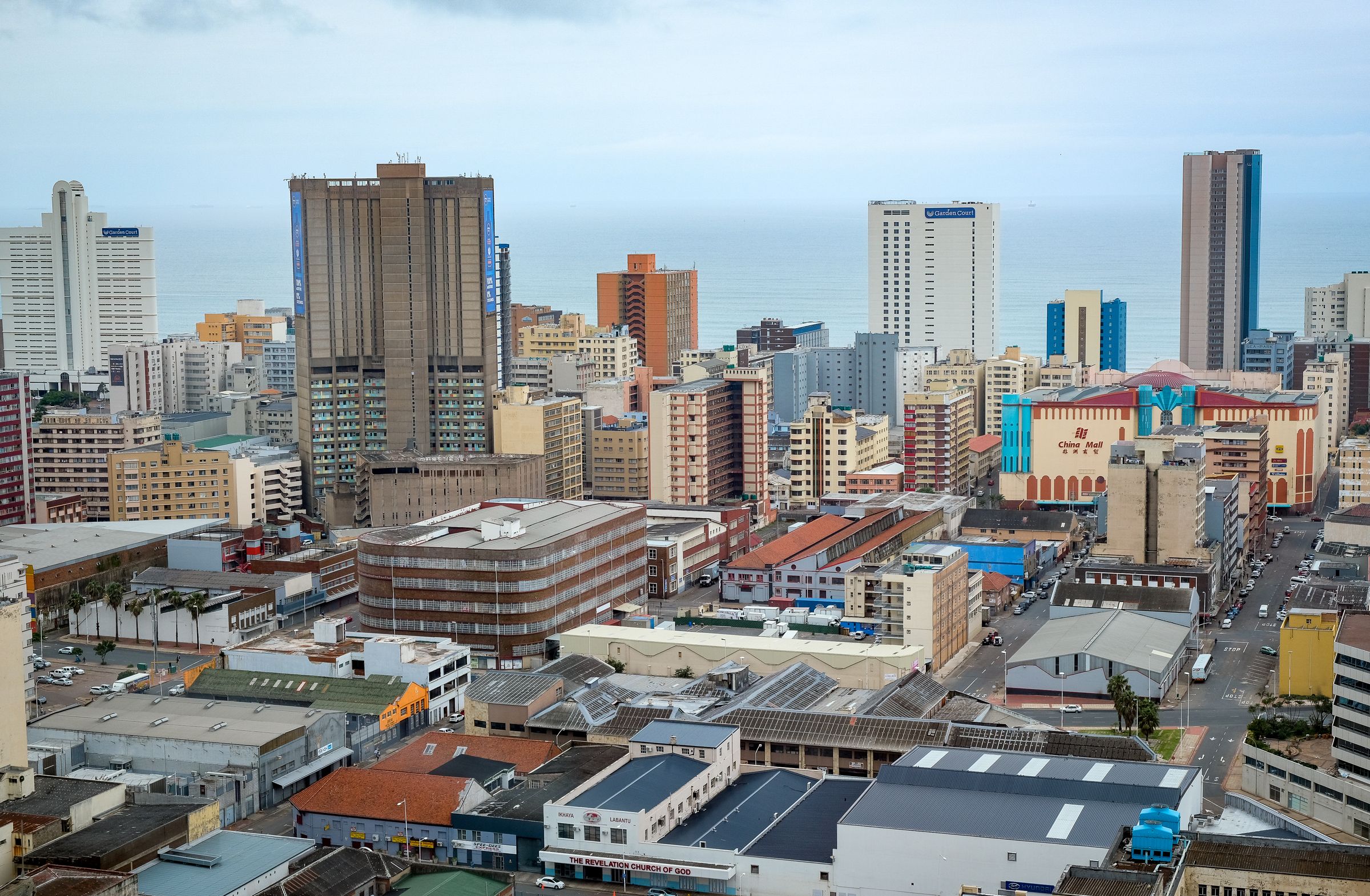
For traders, shopkeepers and business owners in Durban, the past weeks have brought fear alongside their everyday work. On Wednesday night, President Cyril Ramaphosa stood before the Durban Chamber of Commerce and Industry at its 170th anniversary gala dinner and promised that the state would stand behind them. Government, he said, will protect lives, property and the right of every person to conduct lawful business in safety.
His remarks come at a tense moment for people whose livelihoods have been caught up in ongoing protests over illegal immigration. Ramaphosa denounced the recent violence and attacks on businesses, and he linked the city’s economic prosperity to social stability. Without calm, he argued, the businesses that employ residents and sustain families cannot thrive.
The president also had a warning for those who might exploit public frustration. Grievances over illegal immigration, he said, must not be used as a pretext for criminality or as a tool to divide communities. For residents who have watched shops come under attack, the message was meant as reassurance that the state takes their security, and their ability to earn a living, seriously.
“South Africa is a country founded on the principles of human dignity, of equality and the rule of law,” Ramaphosa told the gathered business community. “We will uphold these principles without fear or favour. Government will take the necessary steps to protect lives, property and the right of every person to conduct lawful business in safety.”
The pledge does not stand alone. Behind the president’s words lies a court action with direct consequences for how the protests unfold on Durban’s streets. Police Minister Feroz Cachalia has approached the courts seeking an urgent interdict against March and March and its leaders, among them Jacinta Ngobese-Zuma.
According to the court papers filed in the matter, the minister is asking the court to prevent the group and its leaders from marching, from engaging in intimidation, and from disrupting operations at state institutions. The institutions named include hospitals and Home Affairs offices, places where ordinary people go for medical care and the documents they rely on in daily life. Interruptions there, the government argues, affect residents far beyond any political point being made.
The application is expected to be heard in the Durban High Court on Friday, a date that will be watched closely by business owners, workers and community members who want to know whether further disruption is coming. For those who run shops and businesses in the city, the outcome could shape whether they can trade without fearing for their property or their safety.
Meanwhile, the chamber dinner offered a moment of reflection for a business community marking 170 years in the city, an organisation that has watched Durban’s economy grow through generations of traders and entrepreneurs. Ramaphosa’s address to its members was framed around a simple premise: commerce needs peace, and peace needs the rule of law.
For now, the people of Durban are left waiting on two fronts, for the court’s decision on Friday and for the government steps the president promised, steps he says will be taken without fear or favour. Whether those assurances translate into safer streets and undisturbed trading days is the question that matters most to the residents and business owners the protests have touched.
Reporting by Zanele Buthelezi.